What does it really mean to rest? It’s a question many of us have felt without quite knowing how to put into words. Daiki Toyoshima, a nature therapist who has spent years producing nature therapy programs and retreats across Japan, has made this question the center of his life’s work. In this series, he shares what he’s learned on the ground, in his own words.
Lately, I’ve noticed the word “retreat” popping up everywhere. Seaside resort hotels, hot spring inns tucked into the mountains, stylish single lodges converted from old farmhouses, yoga retreats held at temples, even tour packages from major travel agencies now carry the word “retreat” in their names — it’s honestly a little surprising.
Retreats really are happening in every kind of place imaginable. Having spent many years in the retreat field myself, there’s something I’ve come to feel strongly: that Japan itself, as a country, might simply have a climate and terrain suited to retreats.
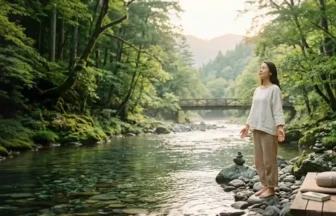
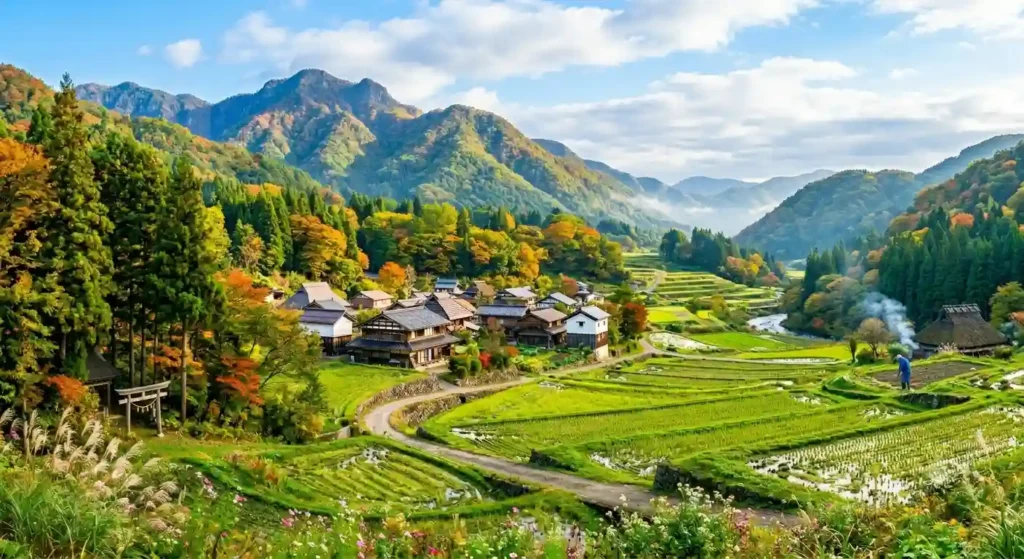
When I think about why, the image that comes to mind is the satoyama — a term for the belt of woodland, fields, and streams where Japanese villages have traditionally bordered the wild mountains, neither fully untamed nature nor fully human settlement, but a living space shaped by both. Another word that comes to mind is “hot springs,” but I’ll save that thought for another time.
I’ve run a nature school and held retreats using satoyama as my field, so it’s a place deeply tied to my own work — one I can’t really separate from what I do. And I find Japan’s satoyama endlessly strange and fascinating.
A satoyama isn’t deep, untouched wilderness, nor is it a purely human, built-up space like a village. It’s something in between. There are coppice woods, traces of animals — signs of nature’s presence — and when you head down into the valley, a stream flows. Climb up to higher ground and you’ll find an old shrine, its stone monuments so weathered by decades of wind and rain that the inscriptions are no longer legible — a reminder of a timescale far beyond the span of a single human life.
There’s a sense of “human presence” too — a feeling that people have lived in this same place for generations, perhaps for a thousand years or more, carried forward from those who came before. It feels like a buffer zone where nature and people have lived side by side — a place where the presence of nature and the presence of people intersect. In other words, it’s an “intermediate product of nature and humanity.” That, to me, is the satoyama — and it’s the original landscape of Japan.
I feel that this quality of the satoyama holds a clue to what a distinctly Japanese form of retreat could be.
The retreat concept that came to Japan from the West often centers on things like doing yoga or practicing mindfulness out in nature. These are wonderful practices, and ones I love myself. I’ve learned a great deal from that wellness mindset — in fact, one of my own hobbies is attending yoga events and yoga retreats, and I make a point of joining yoga-related gatherings often.
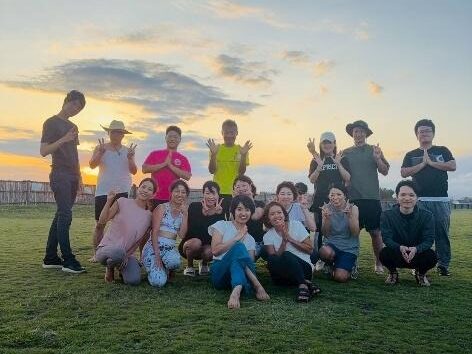
And yet, when I step into a Japanese satoyama, I sense something a little different arising — something beyond the physical sensations you get from a wellness program like yoga.
It’s the feeling of participating not so much in “a program conducted in nature,” but in something much larger: the cycle of nature itself. Rather than fitting nature to the program, you slowly fit yourself to nature’s rhythm — gradually syncing with it over time. I’ve written elsewhere about this sense of unity with nature, this feeling of “falling into rhythm with nature.”
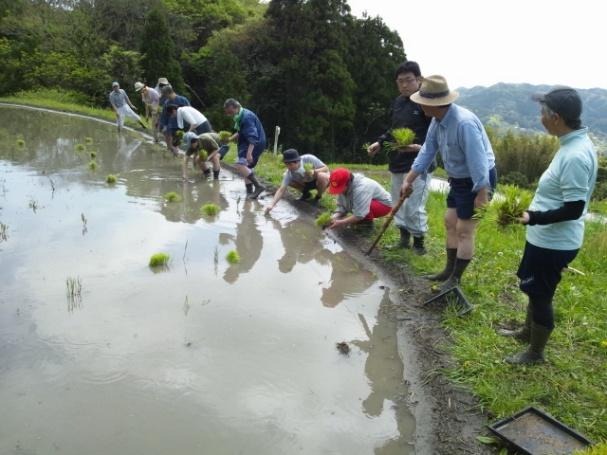
For example:
As spring turns to summer, the satoyama brims with the energy of life.
As for people — at New Year’s, they weave sacred straw ropes and nandina branches gathered from the fields into traditional decorations meant to welcome the incoming year’s deity and ward off misfortune. (Nandina, or nanten, is prized for this purpose because its name is a pun on “overcoming hardship.”)
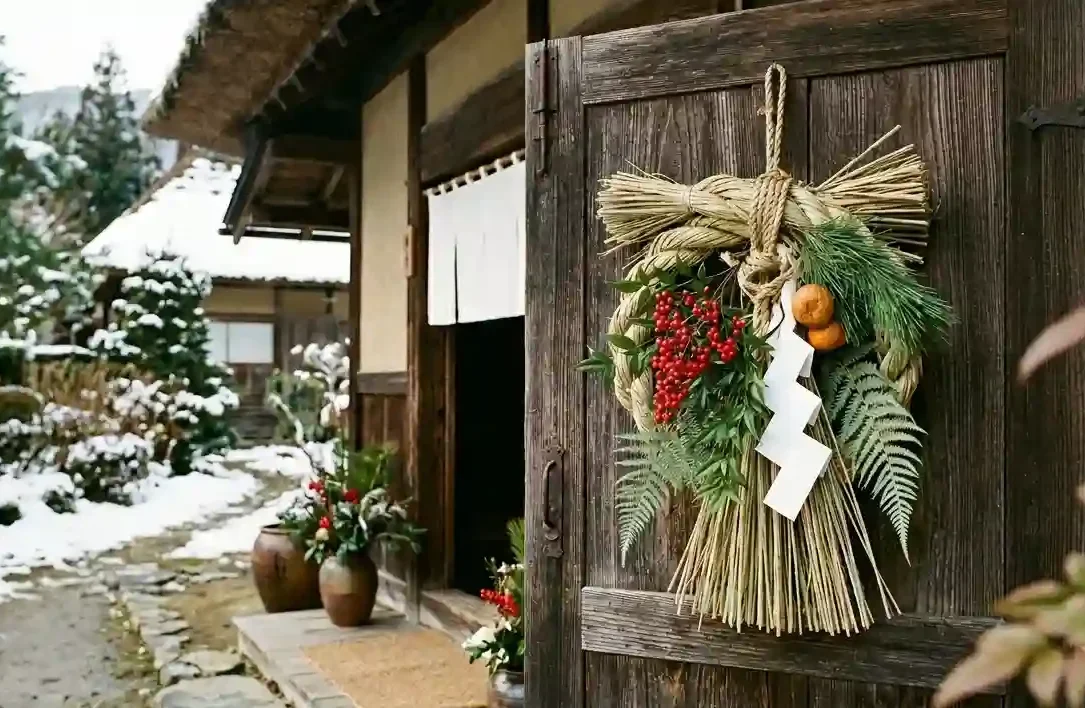
Since ancient times, it seems, the people who lived in satoyama carved out their place within nature’s cycle and skillfully received its blessings as they lived. And the satoyama’s inhabitants were never only human — countless plants and animals thrived there too, each shining with the vitality of the changing seasons, with people, as natural beings themselves, woven into that same fabric.
Where many contemporary approaches to wellness tend to draw a clearer line between humans and the natural world, Japan carries a different, inherited sensibility — one in which plants, animals, and people alike exist within the same great cycle. Humans aren’t seen as standing outside nature as something special, but as one part of it, living as members of it. I believe this is a culture of harmony that Japan can genuinely be proud of, on a global scale.
Living well in step with the changing seasons naturally gives rise to eating what’s in season, and to the culture of preserved and fermented foods eaten out of season.

This rich relationship with nature is exactly the direction where Japan’s retreat culture is heading.
In recent years, interest in wellness tourism has been growing.
What’s the difference between Western-style retreats and Japanese-style ones?
In industry terms, retreats are typically classified as one category within wellness tourism.
Of course, I myself work within that very industry classification. But is a Japanese-style retreat really just a subset of wellness? I see it differently: I believe the foundation is Japan’s own culture and view of nature, with the concept of wellness layered on top of that afterward. The base, I think, is our way of living and being.
In other words, a Japanese-style retreat is an intermediate product of Japanese culture and wellness.
“Like a Satoyama.”
Once you stand on that premise, retreat stops being merely a methodology.
When human beings reclaim their relationship with nature, it becomes — as it did for our ancestors — a harmonious way of living itself, one suited to the climate and land of that particular place. That’s why “Japanese Retreat” isn’t only about a special wellness program. It’s about reclaiming your true, unadorned self within a landscape where nature and people have lived together.
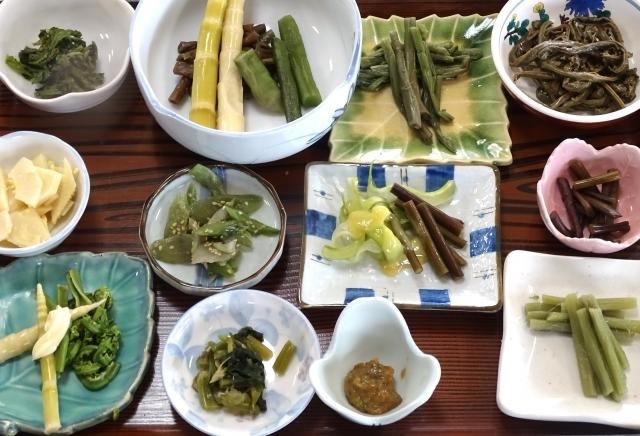
And it’s about remembering, once again, that we too are part of nature’s cycle.
That might be the essence of the Japanese-style retreat.
Representative of Holistic Support; Chairman of the Japan Nature Retreat Association; Principal of Kanoyama Nature School; lecturer at hotel and tourism vocational schools.
Qualifications: Health Exercise Instructor, Nature Game Leader, Hot Spring Sommelier.
Publications and media: Persistent Fatigue, Melted Away! The Art of Restorative Retreats (Subarusha), and has appeared on numerous TV programs and other medias.
– Certified Health Coach — IIN (Institute of Integrative Nutrition), USA
– Nutrition & Food Education Consultant (JAFA Certified)
– Psychological Counseling Specialist (JAFA Certified)
– Founder of Japan Retreat Hub